
SEO for restaurants means making your restaurant easy to find when hungry people search on Google, Google Maps and AI assistants such as ChatGPT. The five things that matter most are a complete Google Business Profile, a menu that search engines can read as text, genuine reviews, restaurant schema on your website, and pages that answer the questions diners actually ask. This guide shows you how to do each one, step by step.
By Eniola Adeleke, Tech Researcher · Updated September 2026. Written for AD Technologies Limited, the AI technology company behind MenuYard, a digital menu platform used by restaurants in the USA, India, Nigeria, the UK and other countries.
Why SEO Matters for Restaurants
Diners decide fast. They search “restaurant near me”, “best jollof rice in Lekki” or “brunch spots in Victoria Island”, look at the map, check photos and reviews, glance at the menu and prices, then go. More and more, they also ask AI assistants for a recommendation and act on the first few names they are given.
- Google Maps decides who gets seen. Local searches usually show a map with a few restaurants above everything else.
- The menu is the deciding factor. Diners want to see dishes and prices before they visit. If they cannot find your menu, they choose a restaurant whose menu they can see.
- AI assistants are the new word of mouth. When someone asks ChatGPT or Google’s AI Mode where to eat, the answer names only a handful of places. Being one of them depends on the information about you online.
1. Complete Your Google Business Profile
Your Google Business Profile is your restaurant’s listing on Google Search and Google Maps. For most restaurants it brings more customers than the website itself. Follow our step-by-step guide to creating a Google Business Profile, then add these restaurant-specific details:
- The right category, such as “Nigerian restaurant”, “Seafood restaurant” or “Café”, not just “Restaurant”.
- A menu link pointing to your online menu, plus the popular dishes Google lets you add.
- Real photos of your dishes, dining room and entrance, so people recognise you when they arrive.
- Accurate hours, including public holidays and late-night service.
- Order and reservation links, and attributes such as dine-in, takeaway, delivery, outdoor seating and parking.
2. Put Your Menu Online as Real Text
This is the most common mistake restaurants make. A menu uploaded as a photo or a PDF is hard for Google and AI tools to read, so your dishes and prices never appear in search results or AI answers. Your menu should be a web page with every dish, description and price written as text, and it should load quickly on a phone.
- Write dishes and prices as text, with prices in your local currency.
- Describe dishes in the words diners search, for example “peppered goat meat” or “grilled croaker”, not only house names.
- Keep it current. An old price or a dish you no longer serve frustrates customers and reduces trust.
- Make it mobile-first. Most diners view menus on their phones.
How MenuYard helps
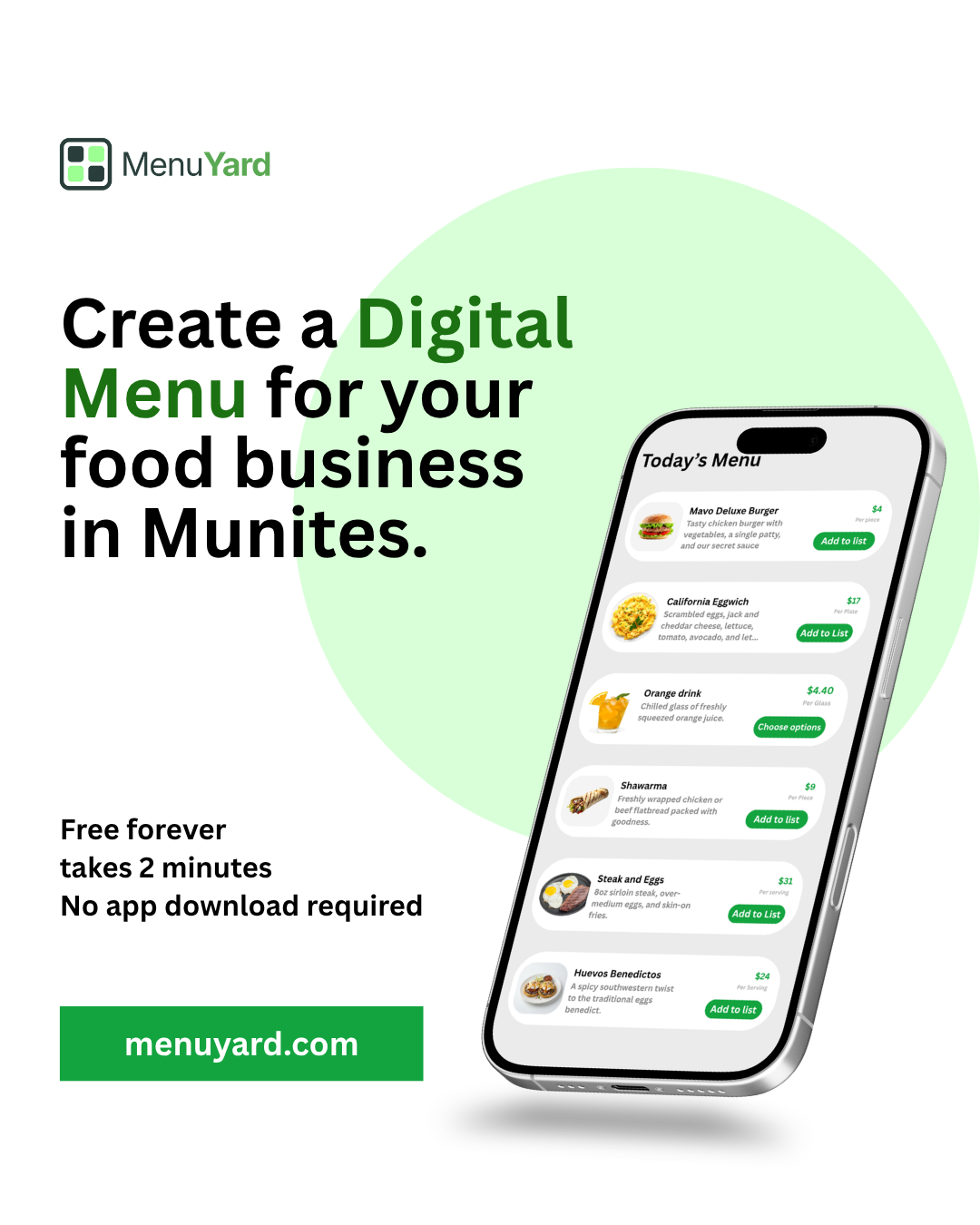
We built MenuYard, an AI-assisted digital menu platform, to solve exactly this. Restaurants create a mobile-friendly online menu and a QR code menu that guests open with their phone camera, with no app to download. When a price or dish changes, you update it once and it changes everywhere. MenuYard is used by restaurants in the USA, India, Nigeria, the UK and other countries.
3. Add Restaurant Schema to Your Website
Schema is hidden code that tells search engines and AI exactly what your business is. Restaurants should use the Restaurant schema type and include:
- Name, address, phone number and opening hours
- Cuisine type (servesCuisine) and price range
- A link to your menu (hasMenu)
- Whether you accept reservations
Your name, address and phone number should match your Google Business Profile exactly. Not sure if your site has schema? Run our free AI Visibility Checker.
4. Earn Genuine Reviews
Reviews influence both where you appear on Google Maps and whether people choose you. Ask happy guests at the right moment: after a good meal, with a small table card or QR code that links to your review page. Reply to every review, including negative ones, politely and briefly. Never buy or swap reviews; Google’s policies prohibit it and it can get reviews removed.
5. Answer the Questions Diners Ask
AI assistants and Google both look for pages that answer questions clearly. Add short, direct answers to your website for questions such as:
- Do you take reservations, and how?
- Do you deliver, and to which areas?
- Do you host birthdays, private dining or corporate events?
- Is there parking? Is the restaurant family-friendly?
- What is the average price per person?
Each clear answer is something Google can show in search results and an AI assistant can repeat when recommending you. Read more about getting recommended by ChatGPT.
6. Get Listed Where Diners Look
Google and AI tools cross-check your restaurant against other websites. Make sure you are listed, with identical details, on Google Maps, Apple Maps, TripAdvisor, the food delivery apps you use, and your Instagram and Facebook pages. Link each profile to your website and your online menu.
7. Make Sure AI Can Read Your Website
Some website security settings and robots.txt rules block AI tools without the owner knowing. If ChatGPT or Perplexity cannot read your website, they cannot recommend you. Check in seconds with our free AI Crawler Checker.
8 Restaurant Marketing Ideas That Also Help Your SEO
- QR code menus on every table, linked to your online menu, so guests see your latest dishes and prices.
- A review card at the till with a QR code to your Google review page.
- Weekly Google Business Profile posts for specials, events and new dishes.
- Photo-worthy signature dishes that guests share, with your location tagged.
- An events page for live music nights, brunch or game nights, with dates written as text.
- Partnerships with local food bloggers who link to your website and menu.
- A private dining and catering page for birthdays and corporate bookings, which are high-value searches.
- Seasonal menus promoted online, such as festive or Ramadan specials, updated on your digital menu the same day.
Restaurant SEO Checklist
| Check | Why it matters |
|---|---|
| Google Business Profile complete and verified | Puts you on Google Maps |
| Menu online as text, with prices | Lets Google and AI read your dishes |
| QR code menu on tables | Keeps guests on your latest menu |
| Restaurant schema on your website | Tells machines who and where you are |
| Same name, address and phone everywhere | Builds trust with Google and AI |
| Fresh, genuine reviews with replies | Improves ranking and bookings |
| Answers to common diner questions | Gets you quoted in search and AI answers |
| AI crawlers allowed | Lets ChatGPT and others recommend you |
SEO for Restaurants: Frequently Asked Questions
Does my restaurant need a website if I have Instagram?
Yes. Instagram helps people discover you, but Google and AI assistants rely heavily on websites and business listings. A simple website with your menu, hours, location and answers to common questions gives them the facts they need.
Is a PDF menu bad for SEO?
It is much weaker than a text menu. PDFs and menu photos are hard for search engines and AI to read, slow to open on phones, and often go out of date. A web-based menu solves all three.
How long does restaurant SEO take?
Google Business Profile improvements can show within weeks. Ranking higher on Google Maps and in AI answers for competitive areas usually takes a few months of consistent reviews, updates and content.
Can AI assistants recommend my restaurant?
Yes, if they can find consistent, clear information about you: a complete Google Business Profile, a readable menu, reviews, and a website AI crawlers are allowed to read.
Get Your Restaurant Found
We help restaurants get found on Google, Google Maps and AI assistants, and we build the digital menu that makes it easier. Start with a free AI visibility check, or try MenuYard for your menu.
Create your digital menu at MenuYard. See our SEO services in Lagos and pricing.